Nano Helix is a PyMOL viewer your agent can drive.
It runs on your own machine and opens structures the way you always have — same viewer, same commands. The difference is that your agent can now read what you selected, run PyMOL in that same window, and tell you what came back.
HOW IT WORKS
You ask your agent.
Nano Helix gives it hands.
The conversation stays in Claude Code or Codex — whichever you already use. Nano Helix is what lets it see your structure, analyse it, and change what is on screen.
YOU ASK IN YOUR AGENT
Colour the four chains separately and show me the hemes.
Four chains, four hemes, four irons — one per subunit.
NANO HELIX DOES THIS
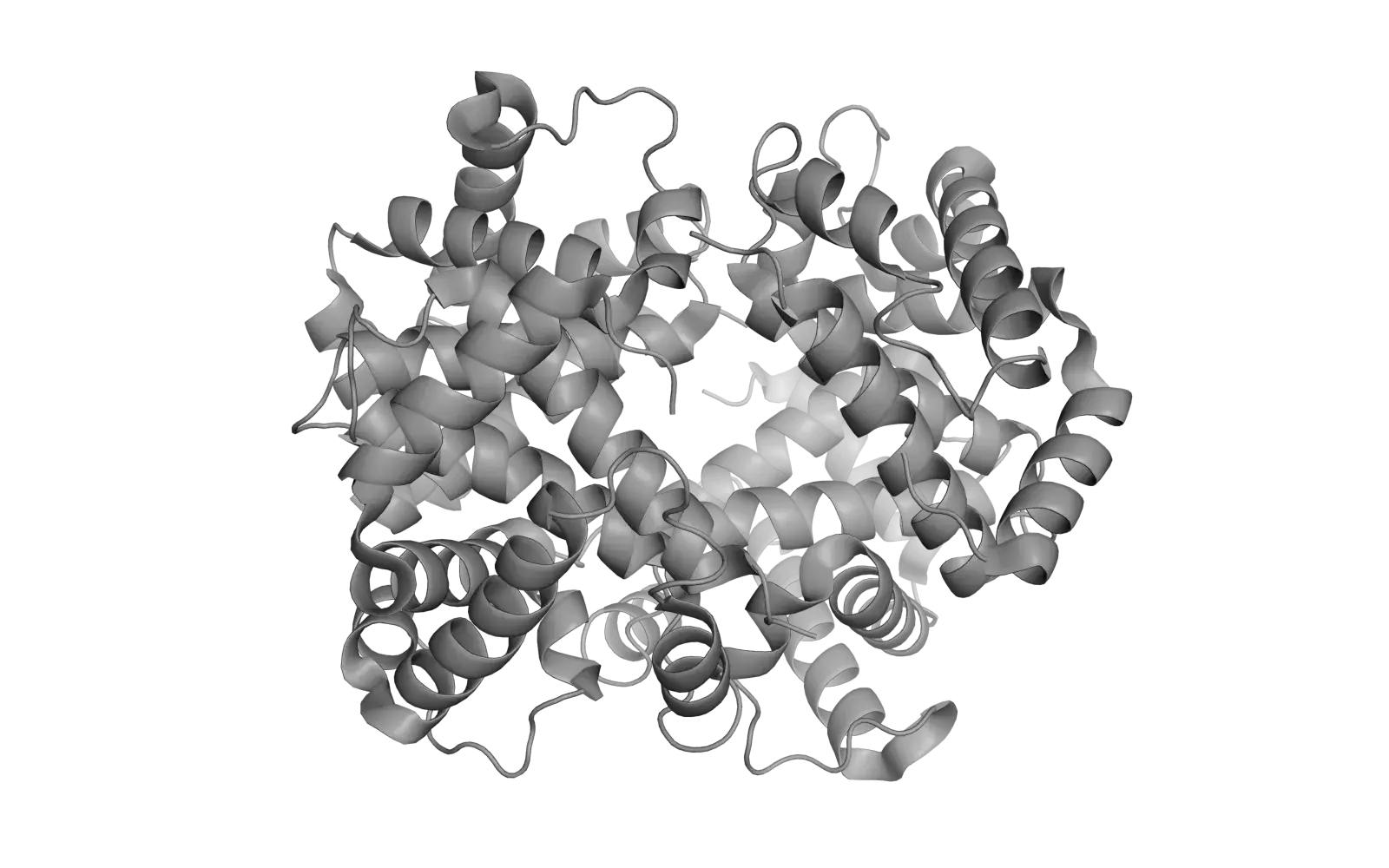
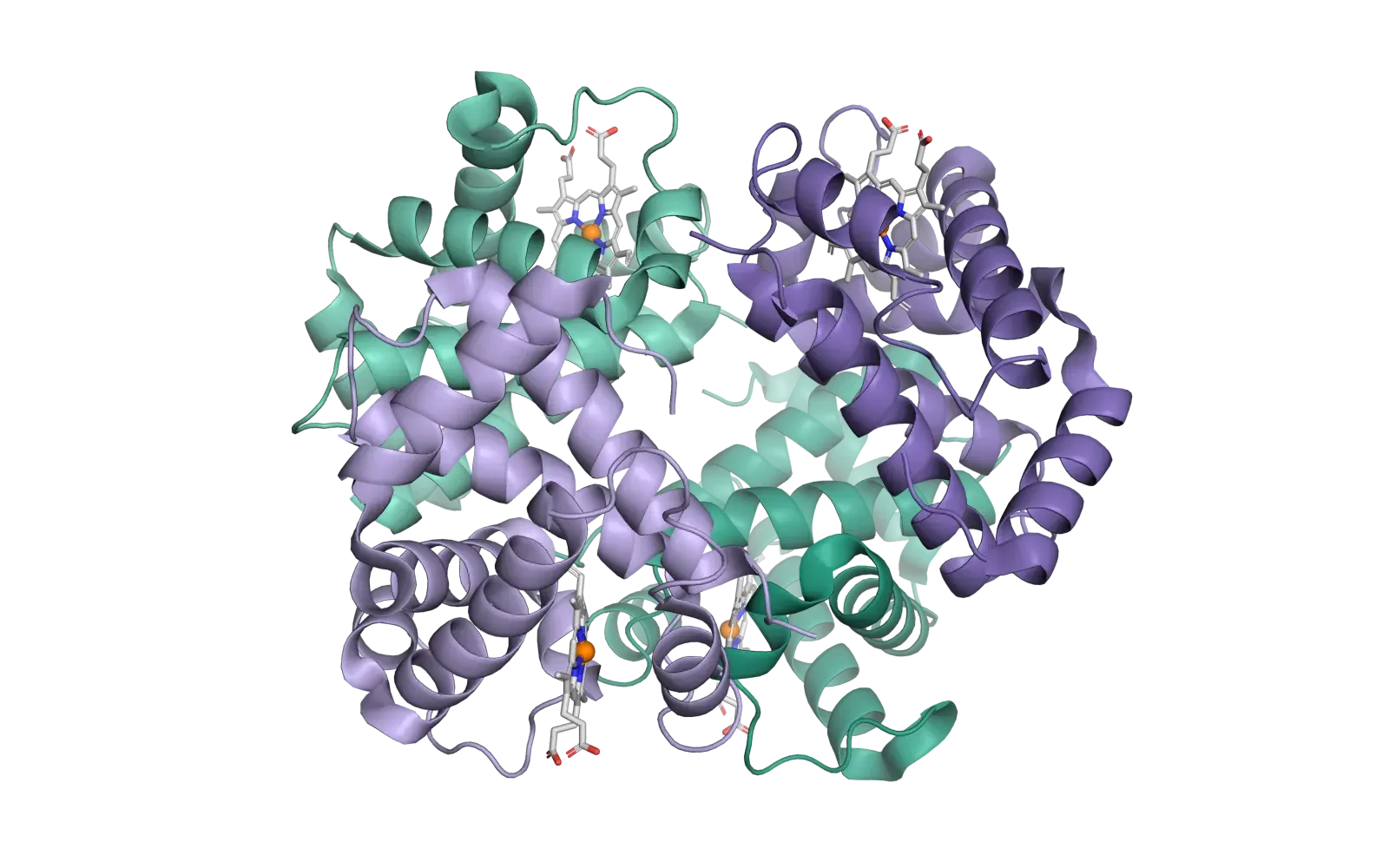
PyMOL> util.cbc; show sticks, resn HEM; show spheres, elem FEHuman deoxyhaemoglobin — PDB 2HHB
Nothing above is a wrapped feature. Each one is the PyMOL command line, run in the session already open on your screen. How the connection works.
Download, double-click, connect.
Nano Helix is free. It installs like any other Mac or Windows app — no command line, no setup guide to follow, no license key. Then open it, click Connect Claude Code or Connect Codex, and start talking.
Download Nano HelixNo account. You already pay for the intelligence through your agent.
NOT A SCRIPT GENERATOR
The rendering was never
the hard part.
You can already ask an agent for a PyMOL script and get a figure out of it. But a script runs blind. It does not know which residue you clicked, it never sees what came back, and it cannot ask the next question. The work that fills your day is the loop — look, measure, reconcile, look again — and that is the part your agent has never been able to join.
It works from your real session
Not a picture of your window — the live scene, objects, chains, camera.
It knows what you mean
Reads your selection, so "this residue" is the one you clicked.
It can change anything
If you can type it in PyMOL, your agent can run it.
It reads the answer back
Align two structures and it tells you the RMSD.
None of this is a curated subset. If you can do it in PyMOL, your agent can do it.
Local only, token-authenticated, and reading is separate from acting. The full scope is in the docs.
THE VIEWER ITSELF
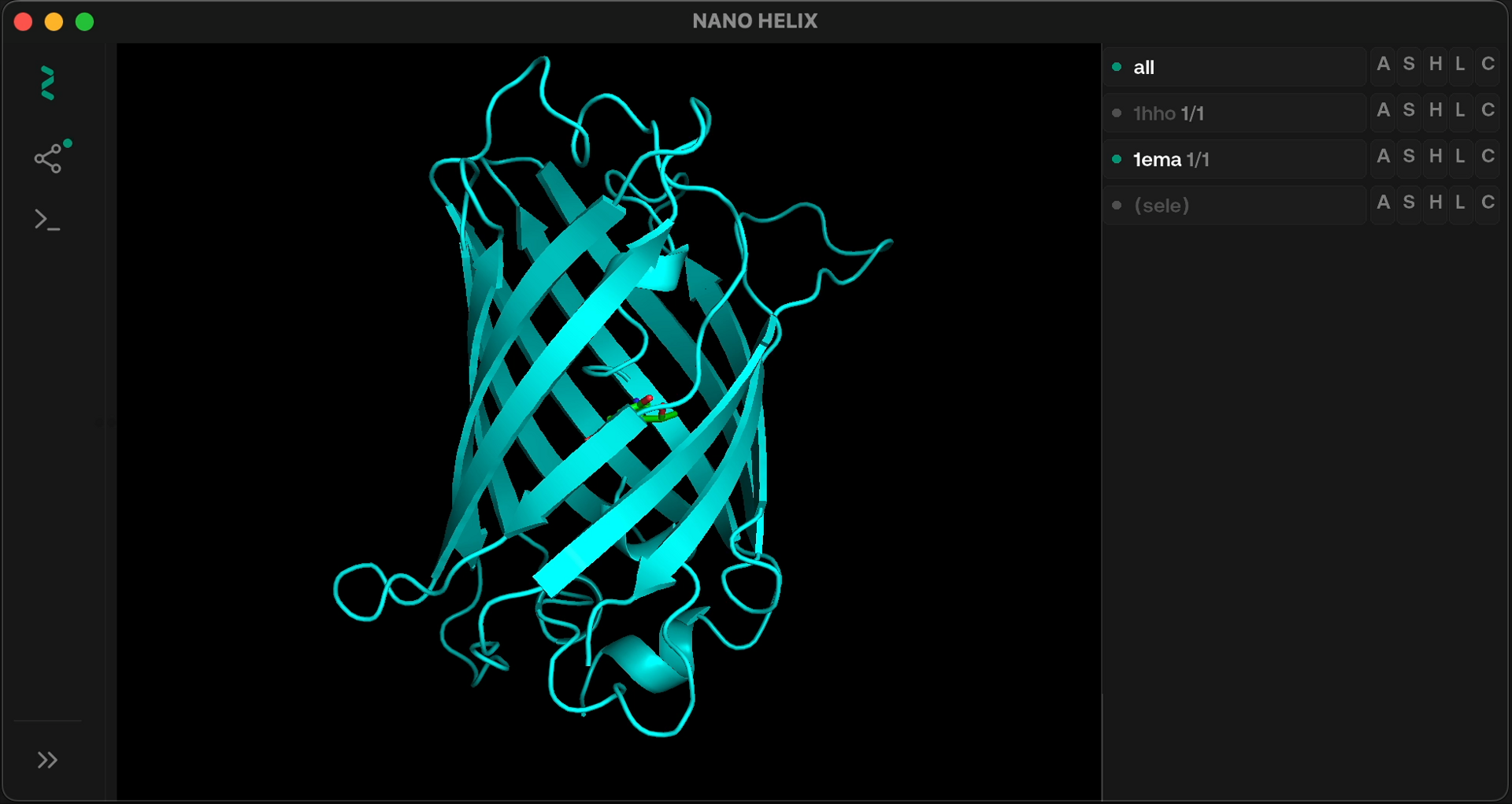
Open-source PyMOL, polished.
Same commands, same PyMOL underneath.
LOCAL BY CONSTRUCTION
Your structures never leave your disk.
No account, no cloud workspace, no backend holding your files. What your agent reads still goes to its own model provider, as it always does. Read the privacy policy.
Feels familiar
Built with PyMOL(TM) technology. The viewer you already know, now reachable by your agent.
PyMOL is a trademark of Schrodinger, LLC.
Local by construction
The bridge listens on localhost only, behind a per-session token. Your structures never leave your machine.

Free, bring your own agent
Nano Helix costs nothing and works with Claude Code, Codex, or any MCP client. No second subscription — you already pay for the intelligence.